>
WRJ230 Games
>
Week 1 - What is Writing for Games?
>
What is writing for games?
*
Module and Learning Space overview
*
Topics covered
*
Assignments
>
Lets start idea generating!
>
Week 2 - Story Mechanics
>
Readings For the Week:
>
Game for the Week - Florence
>
Available on:
*
Steam
*
Mac
*
IOS App Store
*
Google Play
*
Nintendo Switch
>
Articles for the Week
>
Medium
>
"We often assume that stories told in one medium are intrinsically inferior to those told in another." (Murray, 1997 Pg.273) - Or, everyone hates the next generation...
>
The Epics (grand poems)
>
Homer, Sophocles, Herodotus - Legit.... why?
*
THE DREADED CANON
>
Novels/Short Story
>
Did people respect these at first?
*
Spoiler: NOPE
>
Why???
*
Novels & Short Stories were for 'weak minded-women' who couldn't cope with the Latin Epics
>
Silent Film
*
POISONED THE MIND OF THE YOUTHS
>
‘The Talkies’
*
TOOK AWAY FROM THE TRUE STYLE OF CINEMA
>
Video Games
*
POISONED THE MIND OF THE YOUTHS
*
.... Starting to see a pattern here?
*
"We need every available form of expression and all the new ones we can to help us understand who we are an what we are ding here." (Murray, 1997 Pg.274)
>
Topic of the Week: STORY MECHANICS
>
Narrative in Games
>
Ludo Vs. Narrative
*
In the past there was a real debate over whether story/mechanics should be 'most important' in a game.
>
Could they co-exist?
*
Could they co-exist successfully?
>
Traditional Narrative
>
Telling somebody else that something happened’ (Ryan, 2004, Pg.13)
>
What's needed to 'tell' somebody about something happening?
>
A 'Narratee'
>
What is the weakness of tell?
*
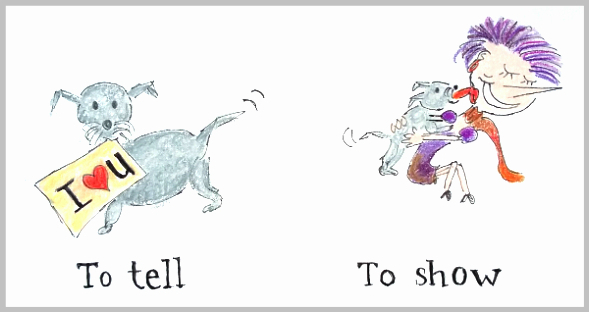
Show_Vs._Tell
>
Narrative as a Mental Construct
*
David Herman & David Bordwell - Cognitive Narratology
>
‘Narrative is a mental image 'a cognitive construct' built by the interpreter as a response to the text [...] But it does not take a representation proposed as narrative to trigger the cognitive construct that constitutes narrativity’ (Ryan, 2004 pg. 9-10)
*
The Human mind is 'programmed' to think in stories, we 'construct' a sequence.
*
A Narrative Schema
>
It's how we make sense of the world, an adaptation of humanity.
>
“Adaptiveness derives from the capacity of the human mind to build a store of experience in terms of individual, concrete cases—not just the actual lived and self-described experiences…but the narratives accumulated in memory that make up storytelling traditions” (Dutton 2009, 189).
*
E.g. 'The Angry Bear'
>
Environmental Storytelling & Narrative Architecture
>
Where does environmental storytelling as an idea come from?
>
'Environmental storytelling is a concept borrowed from theme park design' (Fernandez-Vara, 2011)
*
‘In many respects, it is the physical space that does much of the work of conveying the story the designers are trying to tell. Colour, lighting and even the texture of a place can fill an audience with excitement or dread.’ (Carson, 2000 Pg. 2)
>
E.g., The Haunted Masion
>
Game Mechanics
*
Mechanics - "Means to guide the player into particular behaviour by constraining the space of possible plans to attain goals" (Järvinen 2008: pg.254)
*
Mechanics - ‘Game mechanics are methods [behaviours] invoked by agents, designed for interaction with the game state’ [Sicart, 2008, Pg.23).
*
Essentially, anything you can do in the game whilst abiding by the game's rules.
>
Narrative Game Mechanics
>
'Narrative game mechanics invite agents, including the player, to perform actions that support the construction of engaging stories and fictional worlds in the embodied mind of the player.' (Dubbelman, 2016 Pg.43)
*
So, a narrative game mechanic is a ludic action the player is encouraged to perform to progress the story while giving them a sense of agency.
*
Developed by Mountains
>
About the life & first relationship of Florence Yeoh
*
What did you think about it? Take a few minutes to gather your thoughts.
*
What mechanics did you see? Or, which ones do you recall best? Hop into groups & make a list!
>
Interview with Ken Wong (Creative Director)
>
“We depict an event in their relationship quite literally, like choosing what objects to put on a shelf, or shaking Polaroids. These are simple, mundane activities, but they carry powerful associations for players.”
*
Player's 'take on' the role, i.e. have agency in progressing the story & feel more in-tune with Florence.
>
“Using speech bubble shapes as metaphors for dialogue was a powerful discovery, when we had to depict the characters arguing we revisited this metaphor, showing that the characters now talk to each other differently.”
*
Visual element of puzzle mechanic to convey emotion & tone - very clever
*
Solving a puzzle isn't just 'solving a puzzle' it's having a conversation, being a part of the conversation.
>
"Simplicity allows players to imagine more, and fill in the gaps"
>
What are they saying? Player's will infer.
*
This works great as a style in different genres & media too.
>
Music as voices
>
Each character was represented by an instrument
*
Florence - Piano
*
Krish - Cello
>
Matrix of Ideas
>
Filled in the first 24 in Wk.1
>
Now we'll expand!
>
Begin to fill in the 'Matrix of Forms', pulling first from your Matrix of Ideas
*
Basically you can fill in 24 of the 64 slots using those prompts
>
Then (if time) discuss in groups & see ways in which ideas can be combined
*
i.e. could your Racing Game ideas & Action (Horror) ideas somehow be combined?
>
Week 3 - Non-linear Story
>
Readings for the Week:
*
Game for the Week - Her Story
>
Articles for the Week
*
Make sure you are logged into your Falmouth library account to access this video. You may need to log in at the top right of the GDC Vault page and click for Falmouth access. If you have trouble, the YouTube link is below:
>
Nonlinear Game Narrative in Game writing: narrative skills for videogames
*
Please read chapter 4 for this week's seminar
>
Topic of the Week - NON-LINEAR STORY EXPLORATION
>
"Because they can"
*
Co-Writers of all games - The Players.
>
Players who love to push the boundaries of a game because you can.
*
Glitches
*
Story Progression
>
Look for the possible screw-ups & bugs and ways to progress through the game faster
*
*
If you give players that freedom & the narrative isn't water-tight, they'll find out... and often share it on the internet for a good laugh.
>
So.... how to avoid this?
>
Get in the right mindset as a writer
>
Players aren't passive - they're active agents helping the narrative to unfold.
*
You can craft an ideal way for a your player-character to act, BUT!
*
This may not be how the player wants to move through the game.
*
e.g. Telltale Games (Wolf Among Us cause I know it well)
*
You can move through the entire game saying NOTHING. Very rarely making a dialogue choice.
>
The game still moves onward, Bigby Wolf WILL talk in several situations but at almost every point of dialogue choice you can have him remain silent.
*
Is this what the developers had in mind?
*
Likely not. But they needed to anticipate it might happen.
*
Make use of techniques previous game story writers have employed.
>
Story
>
Story often depends on structure. Structure works. We like structure.
>
"When designing a story, a writer comes up with a sequence of scenes and dialogues and unfolds consecutively in front of an audience." (DeMarle, 2007, Pg.74)
>
We (writers) do this so that by the end of the story, the climax, everything makes sense.
>
We know why the character is going to do what they'll do and how they'll do it. We expect the ending and are satisfied when the ending is what we expect.
>
But remember, satisfied doesn't always mean happy.
*
e.g. I was 'satisfied' when I watched 'Pirates of the Caribbean: Dead Men Tell No Tales' and guess that Barbossa was going to die (he became a parent in a Disney movie)
*
But I was also bored since I saw it coming early in the film.
>
If we're good writers, our audience will be invested enough in our characters to celebrate or commiserate as the climax plays out.
*
In books, films, tv (mostly) & linear games, writers have complete control over this process.
*
In a non-linear game, players can explore, act with agency, chose different abilities, take different paths (without giving a hoothoot about what the writer wants)
*
So... how do we make sure a player reaches the climax of a non-linear game & ensure it'll make sense to them?
>
Techniques to Write a Non-Linear Story
>
Merge the Story & Game
*
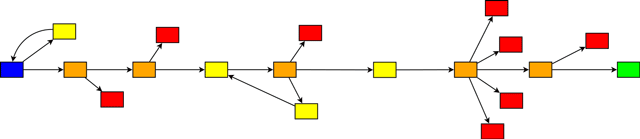
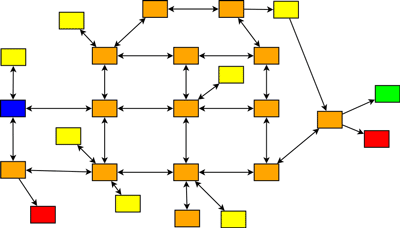
Here are four story-game combinations (DeMarle, 2007 Pg.75-80)
>
Implicit Narrative
*
The story is in the player's mind
>
You can do so much, but the story never changes. e.g. Grand Theft Auto
*
Player can jump ahead, earn loads of money, BUT the MC will still complain about a desperate need for money during some cutscenes.
>
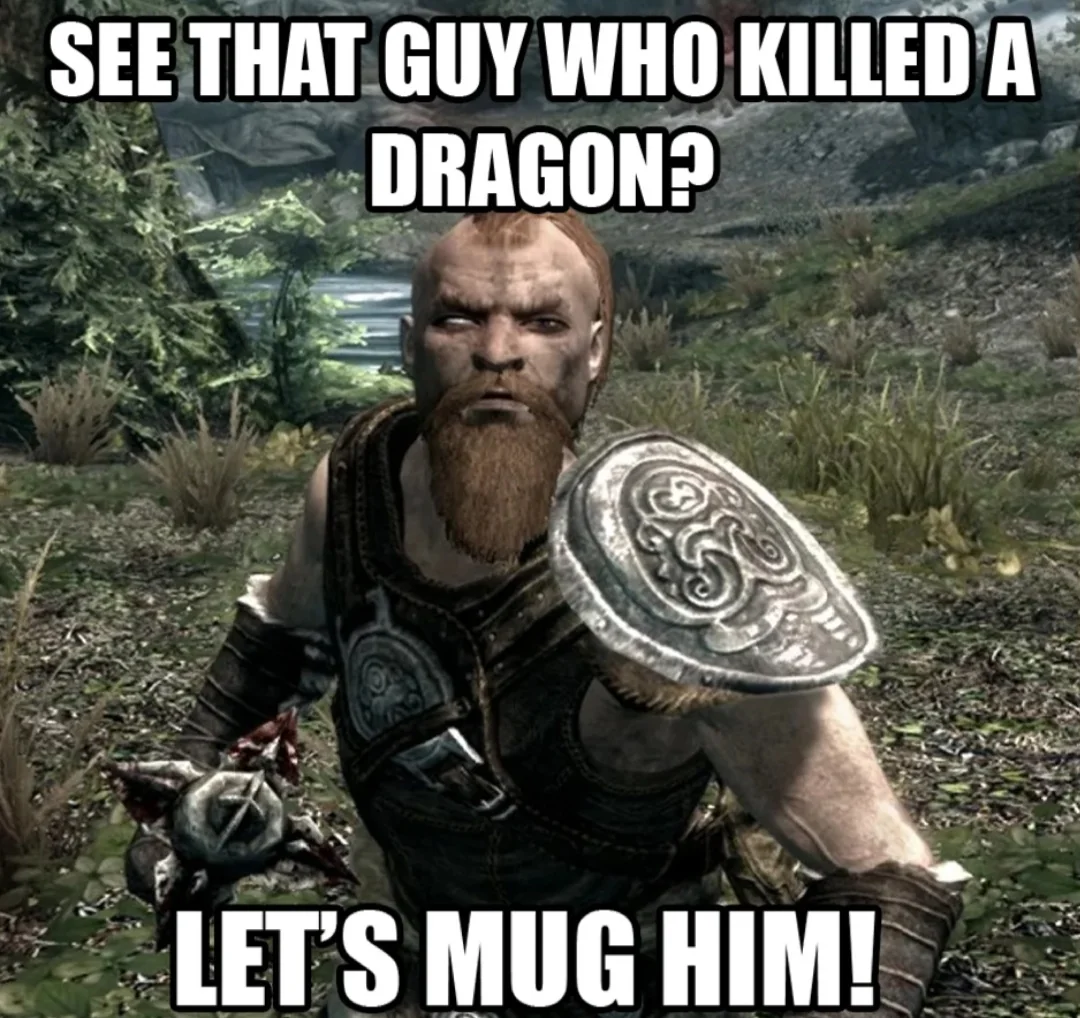
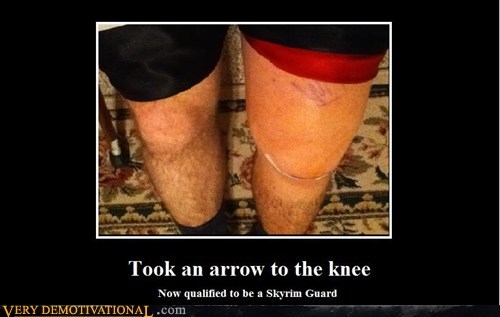
Being mugged in Skyrim
*
h0js6tx7vwj31
*
Them: "Your money or your life!"
*
Me: Slayer of Dragons, Master of all the guilds, Master of Winterhold College: "... Sure."
>
Formal Narrative
*
A 'mostly' linear story
>
Break Game & Story apart - you interact with the game but the story isn't interactive and very static.
*
e.g. giving 'yes or no' answers but you can only chose yes.
>
Beating a boss only to have them beat you in a cutscene afterwards anyway
*
Often breaks immersion
>
Acceptable but has limits. If you're only telling the story through cutscenes... make a film.
*
"Wow that was an amazing opening cinematic sequence... I wish I could've done something in it."
>
Interactive Narrative
*
Exposition relates to player action (ludo success = narrative advancement.
*
You 'Gate the Narrative,’ Jak 2 did this
*
Used very often to stop 'open world' games being too 'open'
>
Other examples:
*
OP Enemies,
*
The location doesn't have events loaded in yet,
*
You need a 'certain item/skill' to get in etc.
>
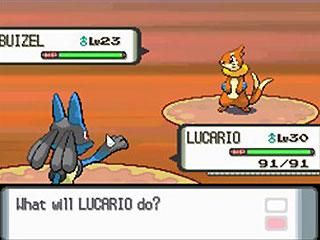
My favourite one:
>
Pokemon Blue
>
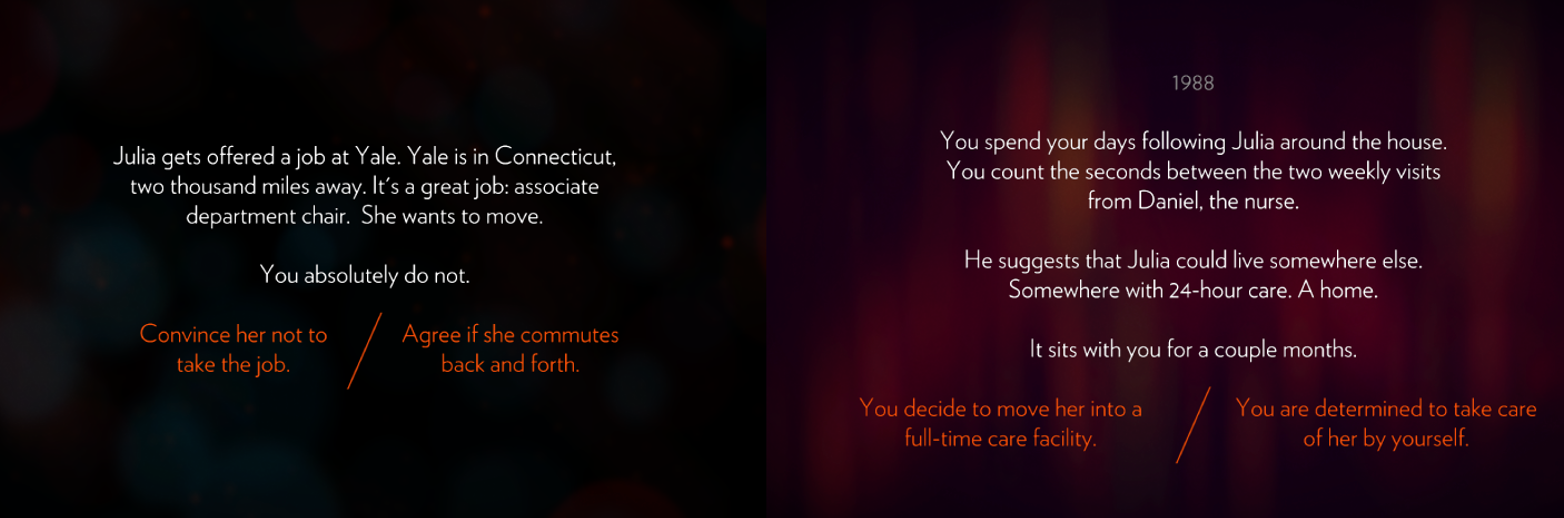
Interactive Story
*
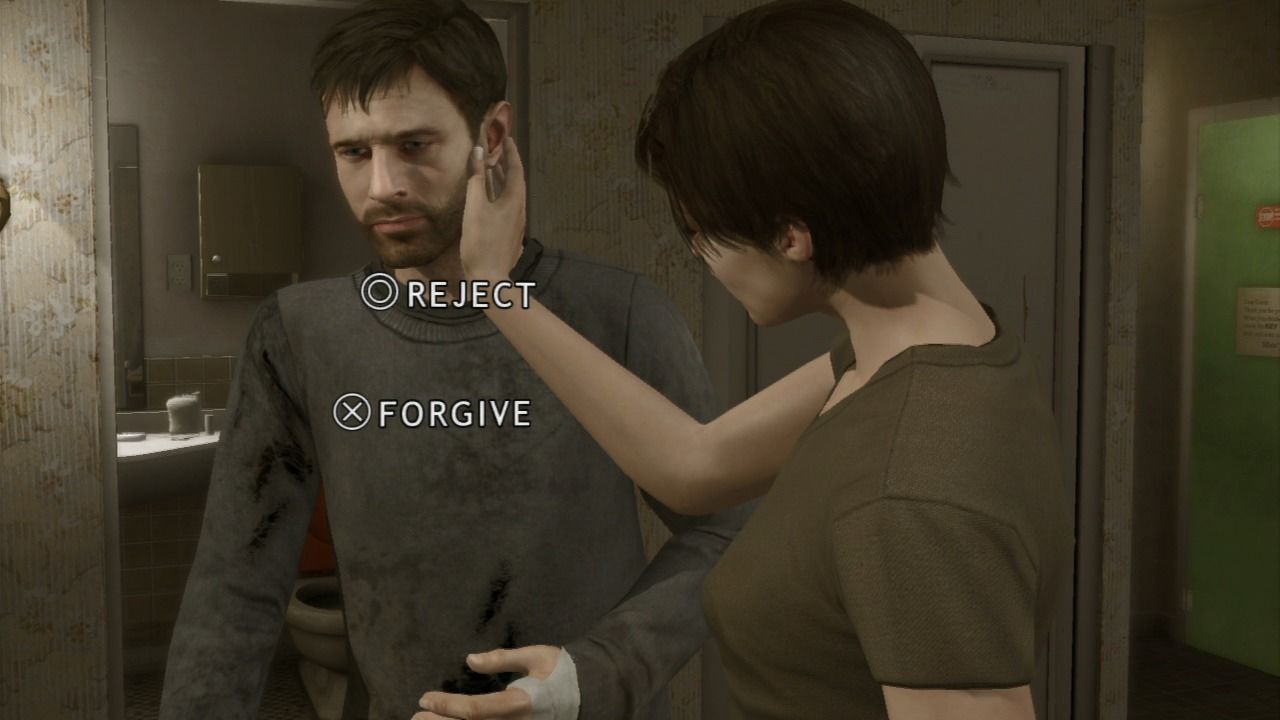
The player's actions effect how the story goes.
>
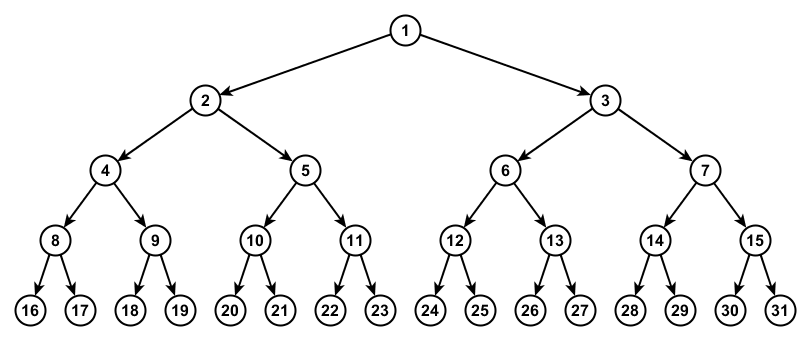
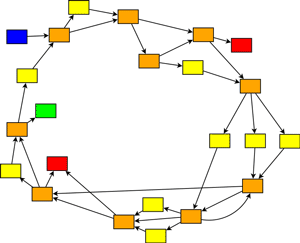
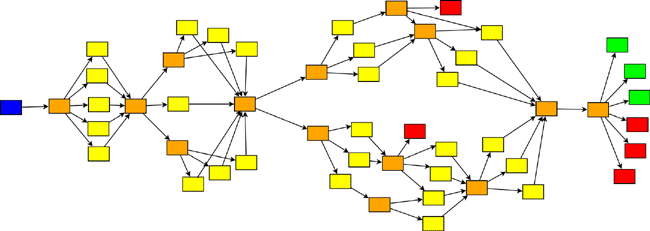
Multiple pathways to multiple endings
*
Screenshot_2026-10-02_at_13.10.58
*
A risky but often rewarding technique difficult for smaller indie developers.
>
Leverage Player Experience
>
High Story & Immediate Story
>
High Story - Plot of game.
>
Pokémon
*
You travel around the world, beating all the gym leaders, stopping a criminal organisation from destroying/taking over the world & become the most powerful trainer in the land.
*
... You are also 10 years old.
>
Immediate Story - What we did in the game. This is what we usually talk about.
*
A whole new narrative several YouTubers have taken advantage of bringing new love and attention to the franchise.
>
Eliminate Internal Inconsistencies
>
Plug all your story-holes
*
015-SpongeBobAirInflation1
>
Identify the vehicles used to tell your story
*
Items - If you have models for them, use those too
*
Cutscenes
*
Dialogue
*
Environment
*
If you're part of a studio, talk to ALL the other departments
>
Layer the details
>
Use the importance scale: 1 to 6
>
1 - VITAL
*
Your father was murdered by the BBEG (Big Bad End Game)
>
6 - Fun Fact
*
Your Great Aunt Miranda liked to collect ribbons and had a pet cockapoo named Florence
>
Think 'modular'
*
Each time a player encounters a chunk of narrative they'll try and make sense of it. Remember we think in stories & structures.
>
We add the structure in & reorganise as more info is made available.
>
We'll even put up with things NOT making sense under the assumption it WILL down the line.
*
If it doesn't... then we RIOT
>
Her Story
*
Speaking of thinking modular....
*
How does Her Story interact with you?
*
How did you interact with Her Story?
>
Did the way you interact change the more you progressed?
*
Did you keep track of important modules?
*
Did any modules really stick with you? Why?
*
Where's the 'game’?